
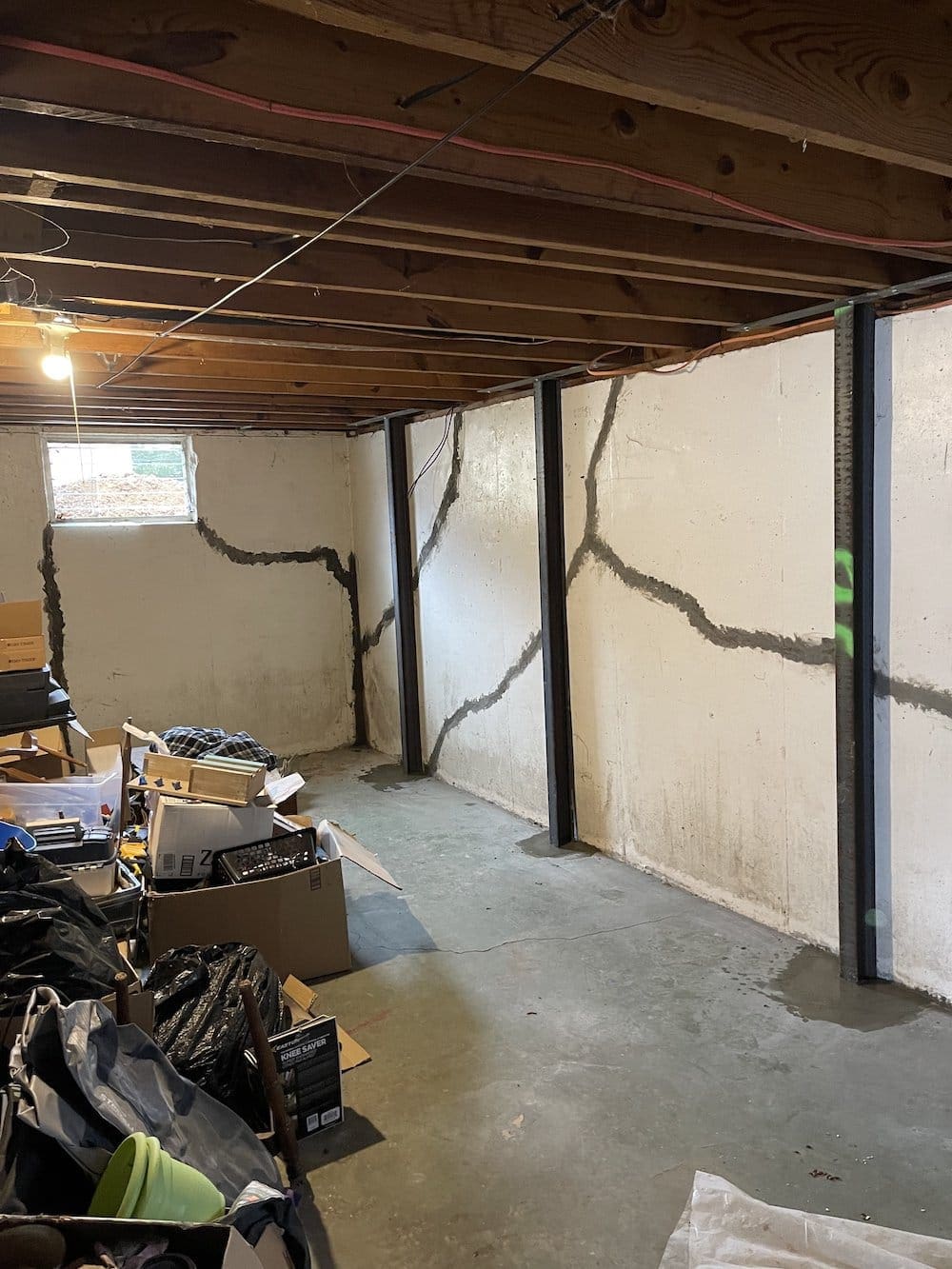
Bowing basement walls are one of the most serious warning signs of foundation stress. What may start as a small horizontal crack or a slight inward curve can slowly grow into a significant structural problem if it is not addressed. Many homeowners do not realize how much pressure the soil surrounding a home can place on foundation walls, especially in areas like Kansas City, where weather patterns and soil types create ideal conditions for movement. Understanding why walls begin to bow and what solutions are available can help you act quickly and protect your home.
What Causes Basement Walls to Bow
The most common cause of bowed basement walls is soil pressure outside the foundation. Kansas City is known for its clay-rich soil, which is highly reactive to moisture. When the soil absorbs water, it expands and becomes heavier. This increased weight presses against the foundation with enough force to cause walls to crack or bow inward. When the soil dries out, it shrinks and shifts, which can weaken the structural support around the home.
Poor drainage around the property can make the issue more severe. If gutters overflow or downspouts discharge water too close to the home, the soil becomes saturated, placing even more pressure on the basement walls. Homes with inadequate grading can also develop problems because rainwater flows toward the foundation rather than away from it.
In addition to soil and drainage issues, weakened foundation materials can contribute to bowing. Concrete block walls are particularly vulnerable because the blocks and mortar joints can lose strength over time. Even poured concrete walls can bow inward when lateral soil pressure becomes too strong.
Warning Signs You Should Not Ignore
Bowing walls rarely appear overnight. Homeowners usually see early signs long before the damage becomes severe. Horizontal cracks running along the middle of the wall are among the most common indicators of soil pressure. Stair-step cracks in block walls also suggest movement. You may notice that the wall appears to curve inward or that the basement floor has begun to pull away from the wall. Doors or windows above the basement might stick or become difficult to open as the foundation shifts.
These problems will not improve on their own. Once a wall begins to bow, the pressure continues to build, and the risk of collapse increases over time. Early intervention is the safest and most cost-effective approach.
How Bowing Basement Walls Are Repaired
Foundation repair professionals use several techniques to stabilize or correct bowing walls, depending on the severity of the issue. Carbon fiber straps are a common solution for walls that have begun to crack but have not shifted significantly. These straps bond to the foundation wall and provide strong, permanent reinforcement that prevents further movement.
For walls that are bowing more noticeably, steel I-beams may be needed. These beams are securely anchored at the top and bottom to counteract soil pressure and provide structural support. When the wall has moved several inches, wall anchors can be installed to pull it back to its original position gradually. Exterior excavation or drainage correction may also be recommended to relieve soil pressure and prevent the issue from returning.
Protecting Your Home
If you have noticed inward movement, horizontal cracks, or any sign that your basement walls are under stress, it is important to get a professional evaluation as soon as possible. Bowing walls become more dangerous and more expensive to repair the longer they are left unaddressed.
Level Up Foundation Repair and Excavation provides expert bowed wall repair services for Kansas City homeowners, including carbon fiber reinforcement, I-beam stabilization, wall anchors, and drainage improvements. Our team identifies the cause of the pressure and recommends the right long-term solution to restore stability to your home.
Give us a call or request a free estimate online today to protect your home and prevent further structural damage.