

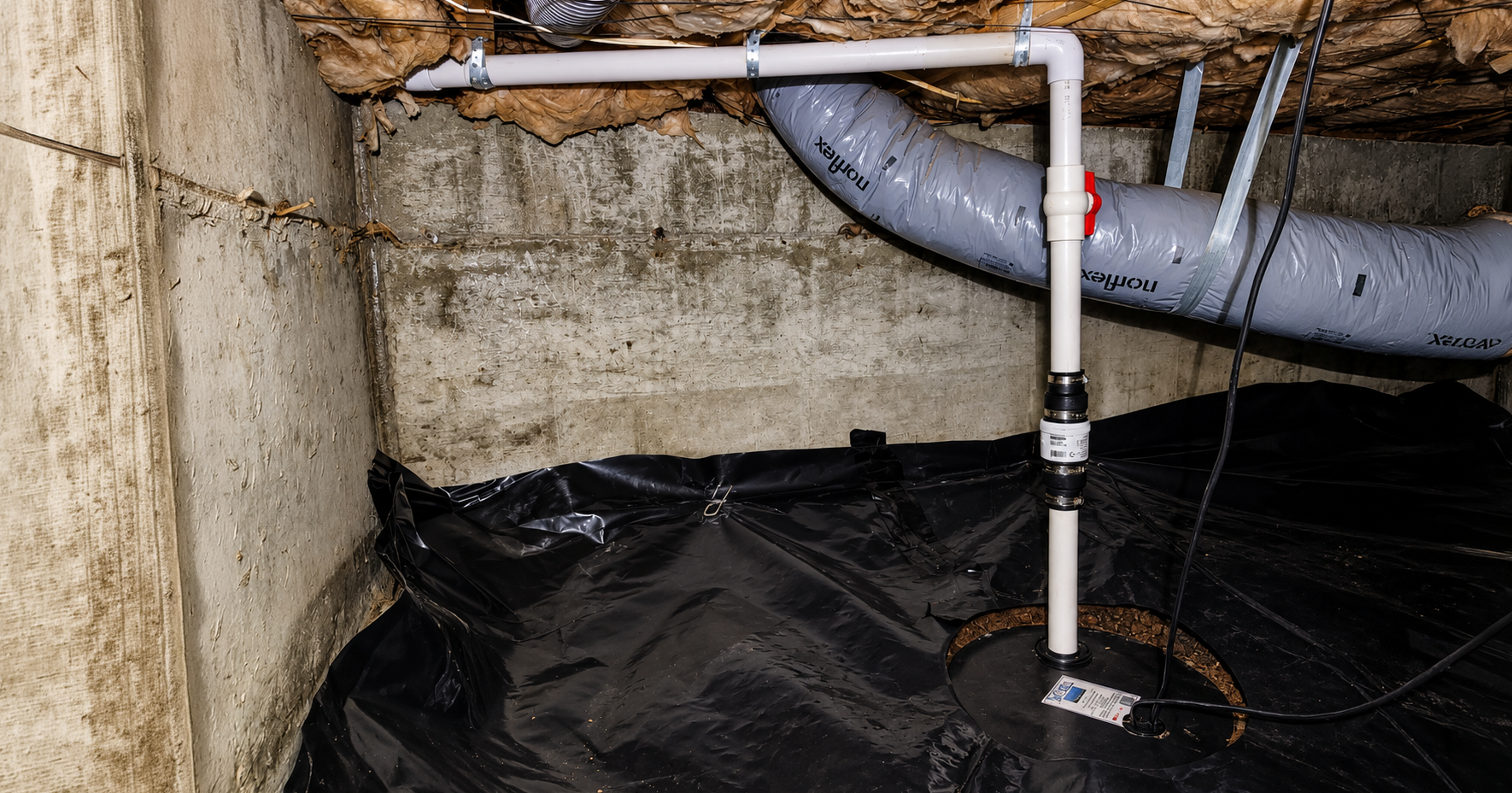
You can get used to the sound of a sump pump during a long rain. It starts, empties the pit, and stops. Then you notice the silence and wonder whether it finished the job or quit. If water is still coming in, that’s the moment a second pump earns its place.
We’d much rather discuss that second pump while your basement is dry. At Level Up Foundation Repair & Excavation in Odessa, MO, we approach emergency sump pump backup planning as a look at the whole setup. Where will the backup get power? Can it handle the water? And is there a clear pipe carrying that water away from the house?
Why a Working Pump Can Stop During a Storm
The lights go out, and a primary pump running on household electricity goes out with them. Nothing has to break inside the pump for that to happen. Other times the power stays on, but a tired motor or switch gives up during a long stretch of pumping. There is also the pump that still runs but simply can’t empty the pit fast enough.
A float caught against the basin wall may never switch the pump on. Debris can obstruct the intake or impeller. Outside, a blocked or frozen discharge pipe can leave a running pump with nowhere to send the water. We look at the whole route, not just whether the motor makes noise. Replacing the motor won’t clear a plugged pipe.
Stay Out of a Flooded Basement
The pit only has so much room. After it overflows, water can reach the boxes on the floor, the carpet, or the bottom of finished walls. Belongings can wait. Do not enter that water to rescue the pump, pull a plug, or get to the breaker panel. You cannot tell by looking whether floodwater is touching live wiring or an appliance. Contamination is another concern.
Keep everyone, including pets, away from the flooded area. Have the utility or a qualified electrician handle an electrical shutoff when one is needed; reaching electrical equipment through water is not a homeowner troubleshooting step. For immediate danger, call emergency services.
Once the area is safe, there is another question to sort out: where did the water come from? Pump failure alone doesn’t establish that the foundation is damaged. Recurring seepage and groundwater pressure still need attention, though. If there are cracks or signs of wall movement, we don’t want those written off as just a sump pump problem.
What a Battery Backup Actually Provides
A battery backup normally pairs a separate pump with a battery, charger, and controls. Ask the installer to show you what starts the secondary pump. Does it respond to rising water when the main pump is overwhelmed, as well as working with the power off? You want the answer for the equipment being installed, not an assumption based on the name on the box.
Battery runtime isn’t a fixed promise. Frequent pumping uses the charge faster, and battery age, condition, pump demand, and lift height all matter. A backup that handles an occasional cycle may not keep up with continuous inflow. We recommend comparing capacity at the actual pumping height and following the manufacturer’s battery testing and replacement guidance. An alarm is useful, too, but an alarm only warns you. It doesn’t remove water.

Where Water-Powered Backups Make Sense
A water-powered unit uses pressurized supply water to remove sump water. It may be an option where municipal water pressure and flow meet the equipment requirements, and it uses additional water while operating. It generally isn’t a suitable outage solution for a home whose well pump also loses power.
These systems need proper plumbing and backflow protection under local requirements. Water service interruptions or inadequate pressure can leave them unable to do the job. Before choosing one, have a qualified installer check the supply and the proposed discharge arrangement. Neither type of backup solves a blocked outlet simply by being connected to it.
Checks to Make While the Basement Is Dry
On a dry day, get out the instructions for both pumps. Use the manufacturer’s test procedure, with dry, safe access to the equipment. If that procedure calls for adding water to the basin, you’re watching for a complete cycle: the float rises, the pump starts, the level drops, and the pump stops. Hands stay out of an energized pump. Leave electrical testing or a suspect installation to a qualified professional.
Check the backup and alarm using their own instructions. Listen for grinding and notice repeated short cycles or water returning to the pit. Those are useful details to pass along when you arrange service. You can also look at the outdoor discharge from a safe place. If it empties right beside the basement wall, some of that water may be making a return trip.
We want to know about overflowing gutters and downspouts ending beside the house, too. Poor grading or a drainage problem can keep feeding water toward the foundation. The pump is doing the removal work, but that doesn’t mean it should be asked to make up for every problem outside.
Make the Backup Plan Before You Need It
Does the pump run through an ordinary rain? Has the basement flooded before? Is the lower level finished, or full of things you’d hate to lose? Those details, along with local power interruptions, help you decide how much backup protection to plan for. To talk through your pump setup and basement moisture concerns, call Level Up Foundation Repair & Excavation in Odessa, MO at (816) 230-0101. We’ll start with what you’ve noticed and discuss the next step for your home.