

A damp basement usually tells on itself before it floods. Musty smell. Sticky air. A little stain near the floor. Maybe the storage boxes feel soft. In a crawl space, it may be sagging insulation, sweaty ductwork, or dirt that never seems dry.
At Level Up Foundation Repair & Excavation in Odessa, MO, we see this around Kansas City homes all the time. The first question is not “what product fixes it?” The first question is simpler: where is the water starting? Miss that part, and you can spend good money making a wet wall look prettier for a while. Not better. Just prettier.
Rainwater Usually Leaves Clues Outside
Before blaming the basement, go outside. Seriously. Walk the house after a rain if you can. Look at the gutters. Look where the downspouts dump. Look at the low spots in the yard. Water is lazy, and it likes repeat routes.
A downspout pouring beside the foundation can keep one corner damp for years. A flower bed packed against the wall can hold water like a sponge. A driveway pitched the wrong way can send every storm right back to the house. None of that is fancy, but it causes plenty of “mystery” moisture.
Concrete Still Lets Water Push Through
Concrete feels permanent, but it is not a raincoat. When wet soil presses against the wall, moisture can push through tiny cracks, old joints, porous spots, and the floor seam. Sometimes it leaks during the storm. Sometimes it waits a day, just to be annoying.
If water keeps showing up after heavy rain, we may need to talk about drainage, sump pumps, or an interior drain path. The idea is not to beg water to stop. The idea is to give it somewhere better to go.
Crawl Spaces Are Their Own Mess
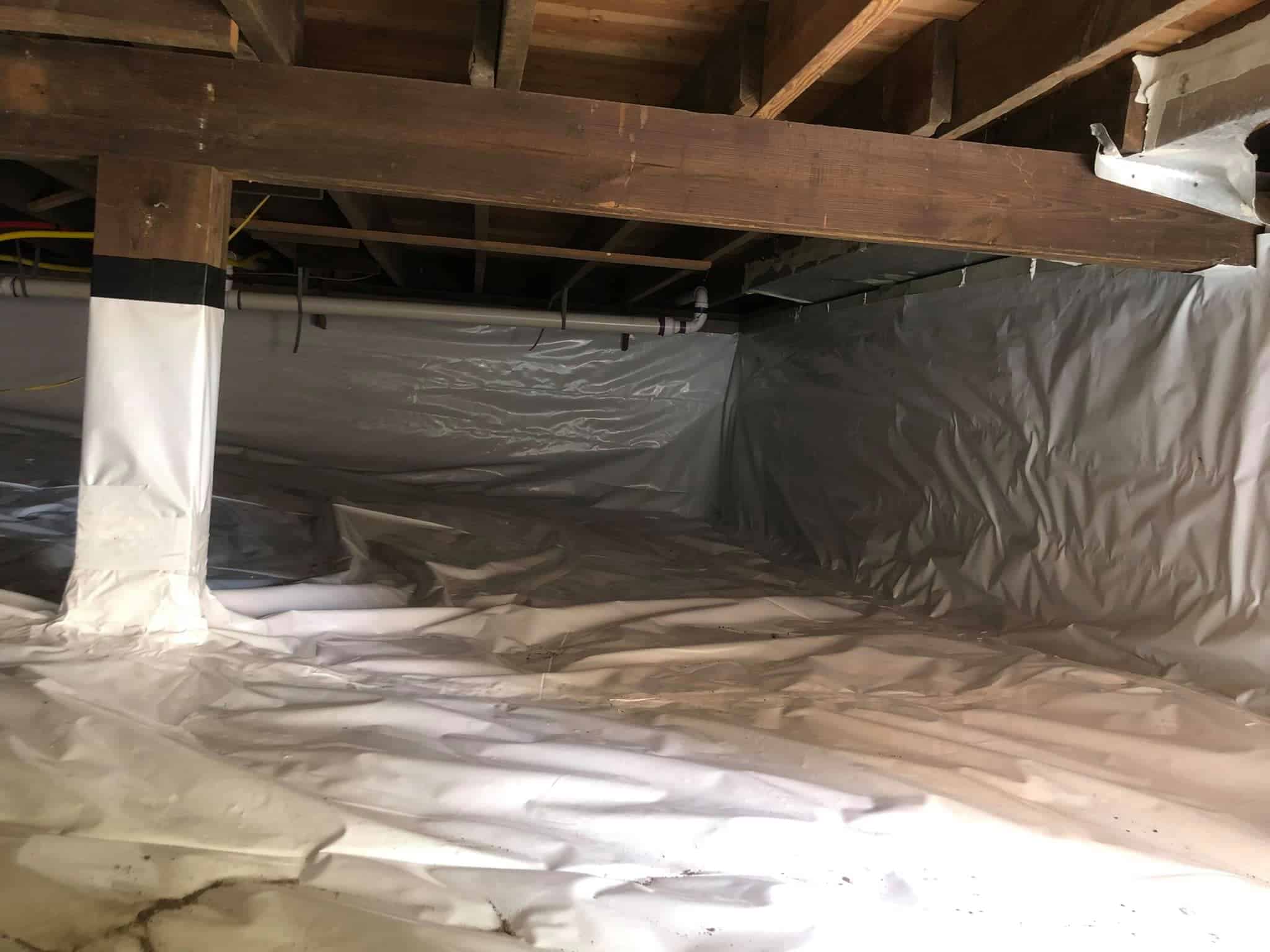
Crawl spaces can be damp without a puddle anywhere. Bare dirt releases moisture. Outside air comes through vents. Ducts sweat. Wood stays cool and damp. Then the house above starts smelling like the crawl space below it. Nobody asked for that.
That is where encapsulation can help. A real vapor barrier, sealed gaps, drainage where needed, and humidity control can calm the space down. A dehumidifier alone may help some, but if the ground is still open, it is basically bailing a boat with the plug out.
Cracks, Windows, and Gaps Still Matter
Sometimes water gets in through a direct opening. A foundation crack. A pipe penetration. A window well that fills up. A rim joist gap. Old mortar. The tricky part is that water can travel before it shows itself, so the wet spot is not always the entry point.
That is why patterns matter. Which wall? Which corner? After rain or all the time? Basement only or crawl space too? The house is usually giving clues. We just have to stop guessing long enough to notice them.
Fix The Why, Not Just The Wet
Basement and crawl space waterproofing works best when the source is clear. Sometimes it is grading and gutters. Sometimes it is drain tile and a sump pump. Sometimes it is crawl space encapsulation. Plenty of homes need a mix.
If your basement smells damp, your crawl space stays wet, or water keeps showing up after storms, call Level Up Foundation Repair & Excavation in Odessa, MO at (816) 230-0101. We will help track down the real moisture source and build a plan that makes sense for your home.