

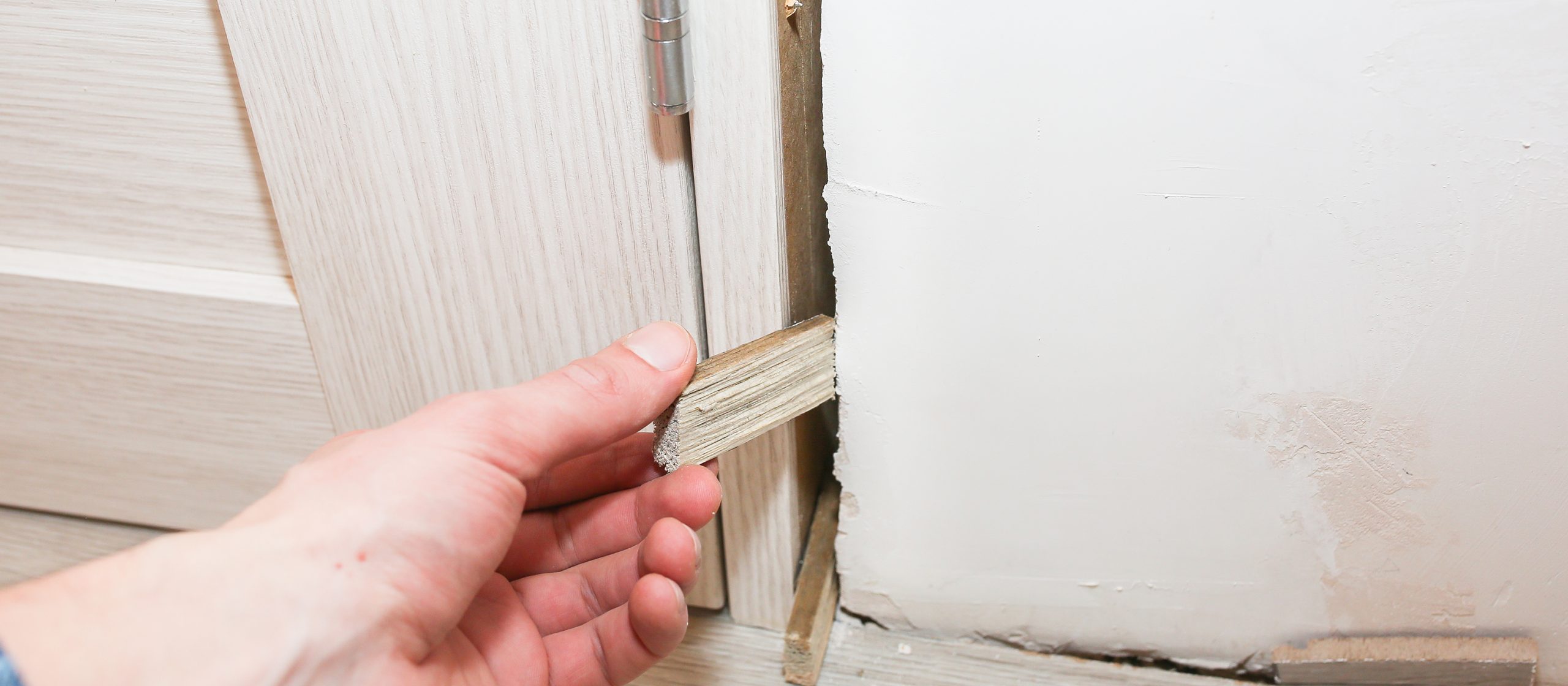
Before reaching for the sander, look at the gap above the door. Is it even? Has the door dropped at a hinge, or does the opening itself seem different? That small pause can save you from fixing the door twice while missing the reason it won’t shut.
We wouldn’t diagnose a foundation from a latch at Level Up Foundation Repair & Excavation in Odessa, MO. We’d ask what else has changed. A single swollen bathroom door and three newly sticking doors across one side of a house are different stories.
Sometimes It Really Is The Door
Wood takes up moisture. Hinges loosen. New flooring can leave less room under a door that used to swing freely. If the rubbing began the day the carpet went in, that’s worth knowing before discussing settlement.
Look at where it catches, and check whether the hinges appear loose. Photos with dates are useful here. No need to take everything apart before calling; the original gap can be helpful evidence.
A seasonal pattern may suggest swelling, especially if the door moves freely again later. Still, “it rained” doesn’t establish the cause. Moisture can affect the door and conditions around the foundation, so we’d look at the rest of the picture.
Take A Walk Through The House
Try the nearby doors and windows as you normally would. Notice a new crack above an opening? A trim gap you don’t remember? A change underfoot? We’d want those details with the sticking-door complaint.
Old pictures can help. It’s easier to discuss a gap that wasn’t in last year’s photo than to guess how long it’s been there. A crack by itself doesn’t reveal its age or cause, and one symptom shouldn’t have to carry the whole diagnosis.
We don’t want you waiting for a photo comparison if the change is rapid, a wall is bulging, or a door needed for escape won’t open. Get prompt professional help. If you have reason to think the structure is unsafe, stay out of the affected space and seek urgent assistance; watching it from inside isn’t an appropriate monitoring plan.
What Happened Outside?
Has a downspout been discharging beside that part of the house? Was there a plumbing leak? Did the grading change? Tell us, even if it seems separate from the door.
Some soils change volume as moisture changes. Water can also alter support conditions in other ways. Which mechanism matters at your home depends on the site; there isn’t one soil explanation that fits every sticking door in Missouri.
Look from safe, accessible areas. Don’t dig beside the footing or start watering the foundation because it worked for somebody online. We need a plan for your conditions, not a borrowed remedy that might add water where it shouldn’t go.
What If The Opening Keeps Changing?
Take a little off the door this month, then a little more next season: at that point we’d be asking why you need to keep doing it. Clearance isn’t the same thing as a stable opening. Compare that with a loose hinge tightened once, after which the door behaves normally. Those results tell different stories.
When other openings are changing as well, or cracks and floor changes appear alongside the rubbing, we’d recommend having it assessed. We want the inside observations considered with what’s happening at the foundation and around the site. Where the findings call for a specialist’s evaluation, get that before choosing a repair.
You Don’t Have To Name The Problem First
You can call and say, “Two doors started rubbing this month, and now there’s a gap here.” That’s enough to begin. We don’t expect you to decide whether it’s settlement before asking us about it.
For our team at Level Up Foundation Repair & Excavation, the number is (816) 230-0101 here in Odessa, MO. Call with the changes you’ve noticed and when they began. You can ask about an assessment without already knowing what needs repairing, that’s the point of having the house looked at.