

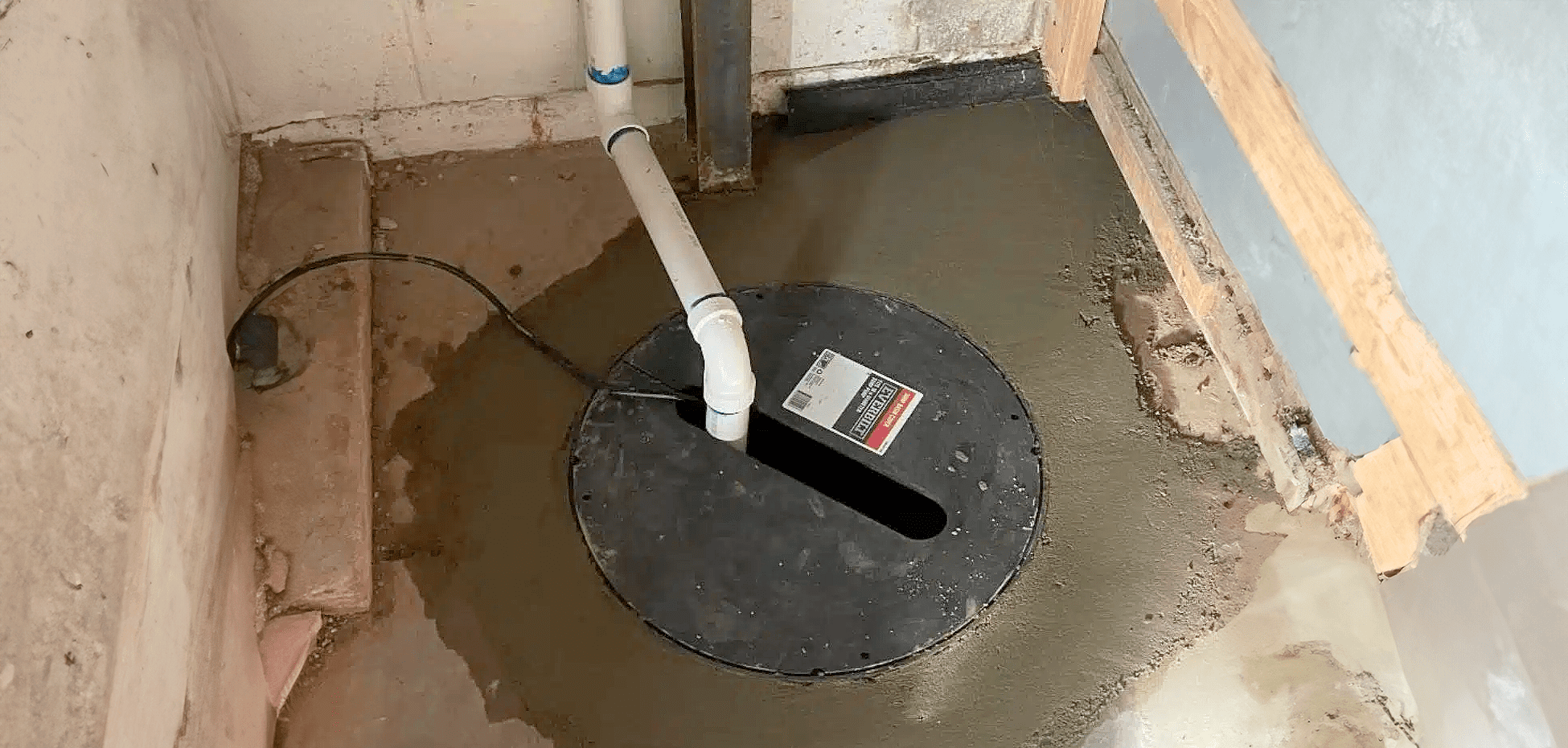
Most people do not notice a sump pump until there is water, a weird hum, or that basement smell nobody wants to investigate.
Then everybody starts looking around like, is that thing the sump pump, or is it just another mystery basement object?
At Level Up Foundation Repair, we hear that question a lot. No shame in it. Sump pumps are usually tucked away, covered, and ignored until rain makes them important.
Check The Basement First
If the house has a basement, start there. Look near an outside wall, in a corner, by the utility area, or behind an access panel if the basement is finished.
You are looking for a round lid or a pit in the floor. Sometimes it is easy to see. Sometimes it is hiding behind Christmas bins, paint cans, and that one box nobody has opened since 2016.
If there is no basement, check the crawl space or the lowest utility area. Water runs downhill. Sump pumps usually live where that water ends up.
Look For The Pit And Lid
The part you see first is usually not the pump itself. It is the basin.
That basin is a pit set into the floor. It may have a plastic or metal lid. Some lids are sealed tight. Some just sit there looking helpful.
If the lid is open, the pump is usually down inside. Black or gray plastic. Not glamorous. More like a little basement bouncer whose job is to kick water out.
Find The Pipe Coming Out
A sump pump needs somewhere to send the water. That is the discharge pipe.
Most of the time, it is white PVC coming out of the lid or pit and heading toward a wall. Outside, it should carry water away from the foundation.
If the pipe dumps water right beside the house, that is not great. That water can circle back like it forgot to leave.
Notice The Float
Inside the pit, many pumps have a float switch. It may look like a ball on an arm, or it may slide straight up and down.
The float is the trigger. Water rises, float rises, pump turns on. Simple idea. Very important little part.
If that float gets stuck, the pump may sit there doing absolutely nothing while the water level climbs. Rude behavior from a machine, but it happens.
Do Not Confuse It With A Sewage Ejector Pump
Some covered basins are not sump pumps. An ejector pump can look similar, especially in a basement with a bathroom or laundry setup.
A sump pump usually handles groundwater and sends it outside. An ejector pump handles wastewater and ties into plumbing. It may also have a vent pipe.
If you are not sure, trace the pipe. Where it goes tells most of the story.
Try A Simple Check If It Is Safe
If the lid is easy to access and the setup looks normal, check that the pump is plugged into a proper outlet. No extension-cord nonsense if you can avoid it.
You can pour water into the pit and watch what happens. The float should rise, the pump should run, and the water should leave.
If it hums, clicks, does nothing, runs forever, or water rushes back into the pit right after it shuts off, make a note. That is worth having checked.
Why Foundation Folks Care About Sump Pumps
A sump pump is not just a basement gadget. It is part of water control around the home.
Water sitting around the foundation can push against walls, sneak through cracks, create musty smells, and make other foundation issues worse over time.
The pump does not fix every problem by itself. But paired with good drainage, it can keep a wet-basement problem from turning into a much bigger conversation.
Get It Checked Before The Storm Does
If you cannot find your sump pump, find one that looks old, or do not trust the sound it is making, do not wait for heavy rain to grade the system for you.
Level Up Foundation Repair in Odessa, MO, serves homeowners in Nashville, TN, with foundation and water-control guidance that actually makes sense.
Call us at (816) 230-0101, and we will help you figure out what you have, what is working, and what needs attention.