

A wet yard does not always look like an emergency. Sometimes it is just that one soft spot you step around after the rain. Sometimes it is water sitting by the porch. Other times, it is the basement smelling damp enough that you start wondering if something is leaking behind a wall.
That is how drainage problems usually show up. Quiet at first. Annoying more than scary.
But water around a house is not something to ignore for too long. It can soak the soil beside the foundation, make clay dirt swell and shift, and add pressure to the basement walls. At Level Up Foundation Repair in Odessa, MO, we see homeowners deal with this all the time. A French drain is one of those simple fixes that can make a big difference when water keeps hanging around where it should not.
So What Is A French Drain Exactly?
A French drain is just a way to give water a path out. That is the easiest way to explain it.
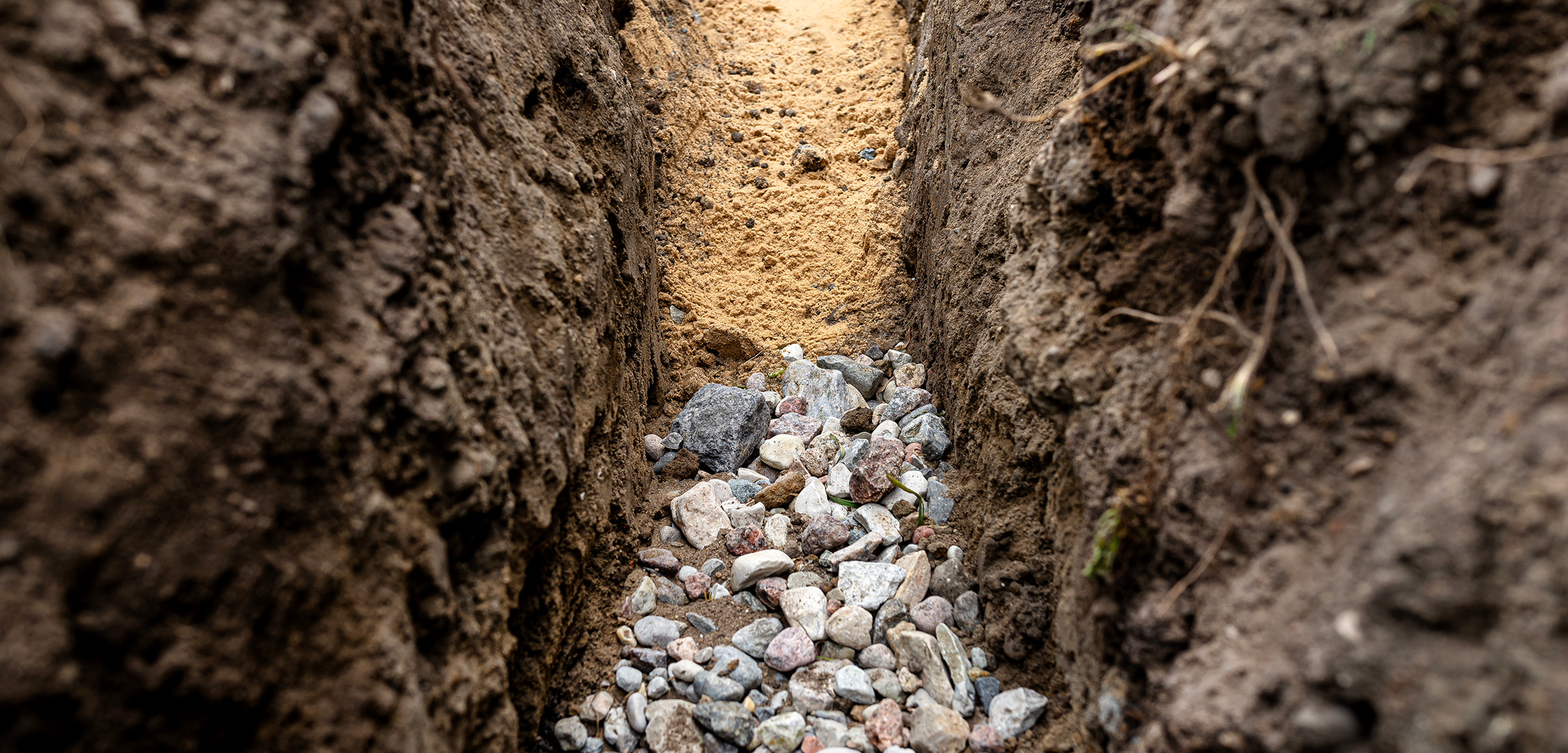
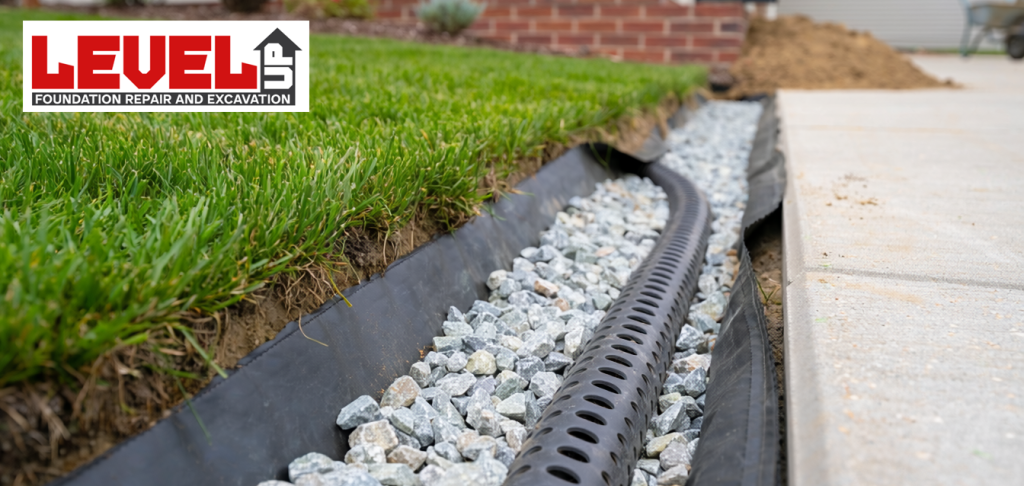
A trench is dug where water is collecting or traveling. Gravel goes in. A pipe with small holes is added. Filter fabric helps keep dirt from washing into everything. Then water slips through the gravel, enters the pipe, and moves away from the problem area.
It sounds almost too simple, and that is why people sometimes underestimate it. The slope has to be right. The pipe has to face the right way. The gravel needs to be clean. The drain has to empty somewhere that makes sense. If any of that is wrong, the system may not help much. Or worse, it just moves the wet mess to a new place.
Why Homeowners Actually Need One
Not every puddle needs a French drain. I would rather say that plainly. If the gutter is clogged, fix the gutter. If the downspout stops two feet from the house, extend it. If the soil slopes toward the wall, grading may be part of the answer.
But some yards keep collecting water even after the obvious stuff is handled. Around Odessa and the Kansas City area, clay soil can be stubborn. It holds water, spreads it sideways, and stays wet longer than homeowners expect.
That is when a French drain starts making sense. If water sits near the foundation after storms, if mulch keeps washing out, if there is a low strip between homes, or if the basement has that damp smell after rain, drainage is worth looking at. The yard is giving you a clue. It may not be yelling yet, but it is definitely talking.
How A French Drain Helps Protect Your Foundation
Foundation repair people care about drainage because soil matters. A lot.
Wet soil gets heavy. It swells. It pushes. Then, when it dries, it can shrink and pull back. That back-and-forth movement is hard on a home over time. Basement walls can crack, bow, or leak when water keeps building pressure outside of them.
A French drain helps by moving some of that water away before it sits there and presses against the house. It does not make every foundation problem disappear. Nothing does. But it can take away one of the biggest things that causes trouble: water staying too close for too long.
Interior French Drains Vs Exterior French Drains
People ask about interior and exterior French drains like they are the same thing. They are related, but they solve the problem from different sides.
An exterior French drain goes outside. It catches water in the yard or near the home before it gets to the foundation. This is usually what homeowners picture first.
An interior French drain goes inside the basement, along the floor edge. It catches water after it gets in and sends it to a sump pump. That can be a good waterproofing setup, especially in basements that already leak.
If the water can be handled outside, though, it is usually worth starting there. Keeping water away from the foundation is a lot less stressful than waiting for it to show up indoors.
What Makes A French Drain Work
A French drain only works if water can move. Sounds obvious, but this is where bad installs go sideways.
The trench cannot be flat. The pipe cannot sit in dirt and hope for the best. Gravel should be washed, not packed with fines. Fabric matters because soil will try to sneak into the system. And the outlet needs to be placed where water can leave without causing a new problem.
This is why some drains fail early. They are buried, so everything looks fine from the surface. Then a few storms later, the same soggy spot is back. Sometimes people think French drains do not work. A lot of the time, the drain was just built wrong.
The Rest Of The Yard Still Matters
A drain by itself is not magic. Gutters, downspouts, patios, sidewalks, driveways, landscaping beds, and yard slope all decide where water goes.
That is why Level Up Foundation Repair looks at the whole area before talking through a fix. A downspout dumping beside the wall is a problem. Soil sloping toward the house is a problem. A patio trapping water against the foundation is a problem, too.
Good drainage is not just about getting water out of one spot. It is about sending it somewhere safe. Otherwise, you are just relocating the headache.
Will A French Drain Fix A Basement Leak?
Sometimes, yes. If outside water pressure is part of the reason the basement is leaking, better drainage can help a lot.
But basement leaks do not all come from one cause. Water can come through cracks, window wells, gaps, weak waterproofing, or under the slab. That is why guessing gets expensive. You want to know what is actually happening before throwing money at it.
A French drain may be the answer. Or it may be one part of the answer. Either way, the outside water problem needs to be taken seriously.
Is A French Drain Expensive?
Cost depends on the job. Length, depth, access, materials, and discharge location all change the price. A short yard drain is not the same as a larger system along a tight side yard.
Still, drainage is often cheaper than fixing repeated water damage or bigger foundation issues later. It is not the fun home project. Nobody invites people over to admire a buried drain. But it can protect the parts of the house that matter most.
How Long Does A French Drain Last?
A good French drain can last for years. The main thing that shortens its life is clogging.
Dirt, roots, and sediment can slow water down if the system is not protected. Clean gravel, fabric, slope, and a good outlet give the drain a much better shot at doing its job for a long time. This is one of those projects where doing it right the first time really does matter.
The Bottom Line
Standing water is not just a yard nuisance. It is a warning. The property is showing you that water is not moving the way it should, and the foundation may eventually pay for it.
Level Up Foundation Repair helps homeowners in Odessa, MO, figure out what is causing water and foundation concerns before jumping into a quick patch. If you are seeing puddles, damp basement smells, erosion, or signs of foundation stress, it is worth getting it checked.
Call Level Up Foundation Repair at (816) 230-0101 to talk through what you are seeing and get your drainage moving in the right direction.